


What Is Car Exhaust? How Your Exhaust System Works and What It Needs
October 22, 2020
Is car exhaust all smoke and mirrors to you? If so, let's unveil the mystery. Learn what car exhaust is and how the system works to help better maintain your Nissan's performance.
What Is a Car Exhaust System?
When gas or diesel flows into an internal combustion engine, the air-fuel mixture ignites, initiating combustion. That combustion generates gases, with one of those being exhaust. Exhaust consists of emissions like nitrogen oxides, hydrocarbons, sulfur dioxide, and carbon monoxide.
Exhaust fumes are not only obnoxious but potentially dangerous. Breathing those fumes for too long can cause carbon monoxide poisoning, which can lead to severe illness or death. The exhaust system funnels those dangerous fumes and gases away from the engine and the interior of your car.
And although many drivers tend to forget about their exhaust system, it's an incredibly important part of your car that should be cared for accordingly.
What Are the Parts of a Car Exhaust System?
Here are the main components of a car exhaust system.
1. Exhaust manifold
The exhaust manifold, which is connected to the engine, sucks up the gases generated in the combustion chamber and sends it to the exhaust pipe. (In some cases, a car comes with two manifolds.) The manifold is made of cast iron, steel, or stainless steel.
2. Oxygen sensors
Modern-day, fuel-injected cars are equipped with sensors that gauge how much oxygen the exhaust contains. Based on this measurement, fuel can be added or taken away to improve fuel economy and overall performance. A typical car comes with two or four oxygen sensors found in the exhaust manifold or pipe.
A common repair needed when your check engine light goes on is the replacement of an oxygen sensor. If you fail to replace it, your fuel efficiency could go down significantly.
3. Catalytic converter
As its name suggests, the catalytic converter converts carbon monoxide, nitrogen oxide, and unburned fuel into substances that cause less harm to the atmosphere, such as nitrogen and carbon dioxide. The converter ‐ usually made with precious metals like palladium, platinum or rhodium ‐ sits between the exhaust manifold and the muffler.
According to CarMD, catalytic converter issues are among the most common reasons that a check engine light illuminates. This usually happens if maintenance and other repairs have been ignored, or your vehicle is fairly old.
Some automotive experts believe the catalytic converter is the most important part of your car's exhaust system.
4. Resonator
The resonator, which looks and even acts like a muffler, alters engine noise and helps the muffler to quiet the noise. Some cars are equipped with more than one resonator.
5. Exhaust pipe
The exhaust pipe ties together all of the parts of the exhaust system. It serves as a sort of traffic cop for the whole system, efficiently directing exhaust through the car's plumbing. It's typically made of steel. Cars with dual exhaust systems come with two exhaust pipes rather than one.
6. Muffler
The muffler decreases the amount of engine noise that travels through the exhaust system. It's designed to absorb sound. Without it, your car's exhaust system would be significantly louder! In many states, like Tennessee and Texas, a driver can be cited and fined for excessive exhaust noise.
7. Tailpipe
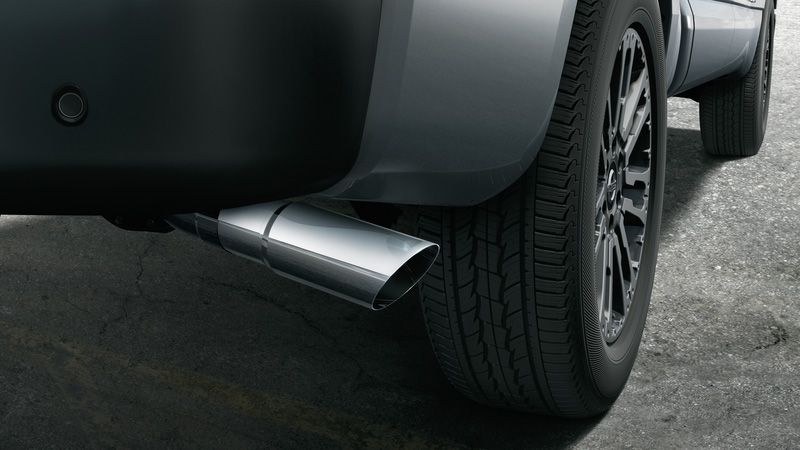
Your car spits out cleaned-up, noise-filtered exhaust through the tailpipe. Most cars are equipped with one muffler, but some have two mufflers ‐ the second of which is referred to as the tailpipe. If your vehicle has one, you'll see it poking out of the back of your car.
How Do You Care for the Car Exhaust System?
Your car typically alerts you when it's time to care for the exhaust system. Your car's intricate diagnostics system monitors the exhaust system and alerts you when there's an issue. The check-engine light often comes on when a problem pops up, such as a faulty catalytic converter or a broken oxygen sensor.
So, what can you do to ensure your exhaust runs smoothly? Here are some tips.
- Follow Nissan's recommendations for servicing your car. If you can't find your owner's manual, download it online.
- Pay attention to how your car is running. Listen closely for rattling sounds or loud exhaust noise, and be aware of vibrations. Any of these could be signs that something may be wrong with the exhaust system.
- Monitor your gas mileage. If your car's fuel efficiency is slipping, there might be a problem with the exhaust system.
- When the check engine light comes on, stop driving your car as soon as possible. Then either take your vehicle to get checked. We recommend using the services of your Nissan dealer or, if you're a skilled DIY mechanic, investigate the problem yourself and get any necessary Nissan parts to fix the problem.
- Fix leaks and repairs quickly. Waiting too long to address a leak or fix a part of the exhaust system can damage other components.
- Watch out for potholes and road debris. If your car hits a pothole or road debris, that could damage the exhaust system, particularly the muffler.
- Cut back on short trips. Frequent short trips can wear down your car's exhaust system.
H2: What Are Some Common Problems With a Car Exhaust System?
Problems with a car exhaust system arise from time to time. After all, the system is complex, relying on an array of components to operate correctly. Here are some of the common problems you might encounter with your car's exhaust system:
- Rust. Water vapor can build up in the exhaust system, leading to rust and corrosion. One way to help prevent rust and corrosion is by taking fewer short trips. Short trips don't allow time for your engine to reach optimum operating temperature, so water vapor that collects in the exhaust system may not evaporate.
- Broken hangers. Here's where bumpy roads come into play. Bouncing around on a bumpy road can lead to damaged hangers (which help hold your exhaust system in place) and can subsequently endanger the exhaust pipe.
- Exhaust leak. If the volume goes up on your engine noise, it might be due to an exhaust leak in the manifold or elsewhere.
Maintain and enhance your exhaust performance with genuine Nissan Parts. Shop online today for parts that fit your vehicle!