


OEM Nissan Condensers & Evaporators
Cool Refrigerant with Condensers and Evaporators
Why shell out big bucks for parts you're not sure will fit? A/C condensers and evaporators exchange heat in cooling systems. The condenser releases heat outside the vehicle while the evaporator absorbs heat inside the cabin. These heat exchangers include aluminum cores with fins that increase surface area. Factory components use specific designs for efficient heat transfer.
How Condensers and Evaporators Transfer Heat
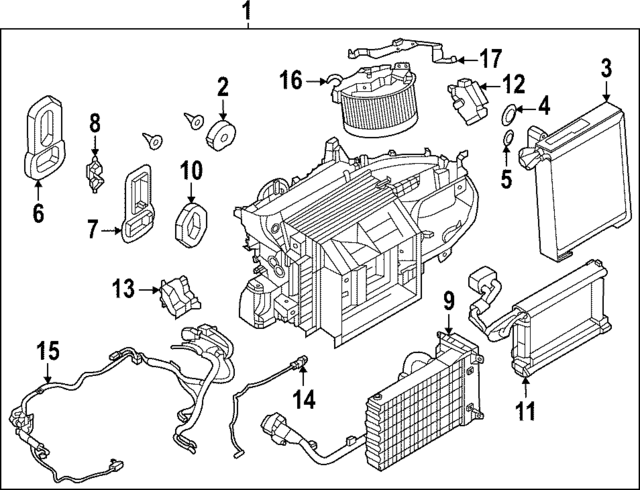
Your condenser mounts in front of the radiator where airflow cools hot refrigerant. High-pressure refrigerant enters as a hot gas and exits as a cooler liquid. Fins increase surface area for heat dissipation. The evaporator sits inside the HVAC housing under the dashboard. Low-pressure liquid refrigerant absorbs cabin heat and evaporates into gas. The blower motor forces air across cold evaporator fins. Expansion valves regulate refrigerant flow into the evaporator. Nissan condensers and evaporators for vehicles like the Murano and Kicks use specific core sizes for adequate cooling. Refrigerant lines connect components to the compressor. Moisture from humid air freezes on evaporator fins requiring defrost cycles. The system works with AC system components for complete cooling.
What Damages Heat Exchangers
Condensers develop leaks from road debris impacts or corrosion. Evaporator cores corrode from moisture and chemical exposure. Fins bend from high-pressure washing or impact damage. Refrigerant leaks occur at fitting connections. Internal passages clog from contamination. Generic aftermarket units often lack adequate capacity. Salt exposure accelerates corrosion on condensers. Evaporator drain tubes clog allowing water damage. Poor airflow reduces heat transfer efficiency. Collision damage to front-end crushes condensers. Mold grows on evaporator surfaces creating odors.
Testing Heat Exchanger Function
Replace condensers or evaporators when leaks cause refrigerant loss. Weak cooling despite proper refrigerant charge indicates restricted heat transfer. Most condensers last 8 to 12 years before corrosion causes leaks. Evaporators typically last longer unless corrosion develops. Musty odors suggest mold growth on evaporator fins. Check refrigerant pressures to identify system problems. Visual inspection of condensers shows fin damage or leaks. Evaporator replacement requires dashboard disassembly. UV dye helps locate small leaks. Genuine Nissan condensers and evaporators include proper core sizing and corrosion-resistant materials that provide efficient cooling and long service life, unlike aftermarket units that may not fit properly or provide adequate heat transfer capacity.
Order today and see why mechanics consistently choose Nissan Canada for genuine components and accessories.



A/C Condenser
Nissan
921006RA0B
Rogue. Incl.A/C Receiver Drier. Japan built, 1.5L turbo. USA Built. Us built.
$351.50 CAD


